What Box Build Assembly Includes (and When It Is Worth It)
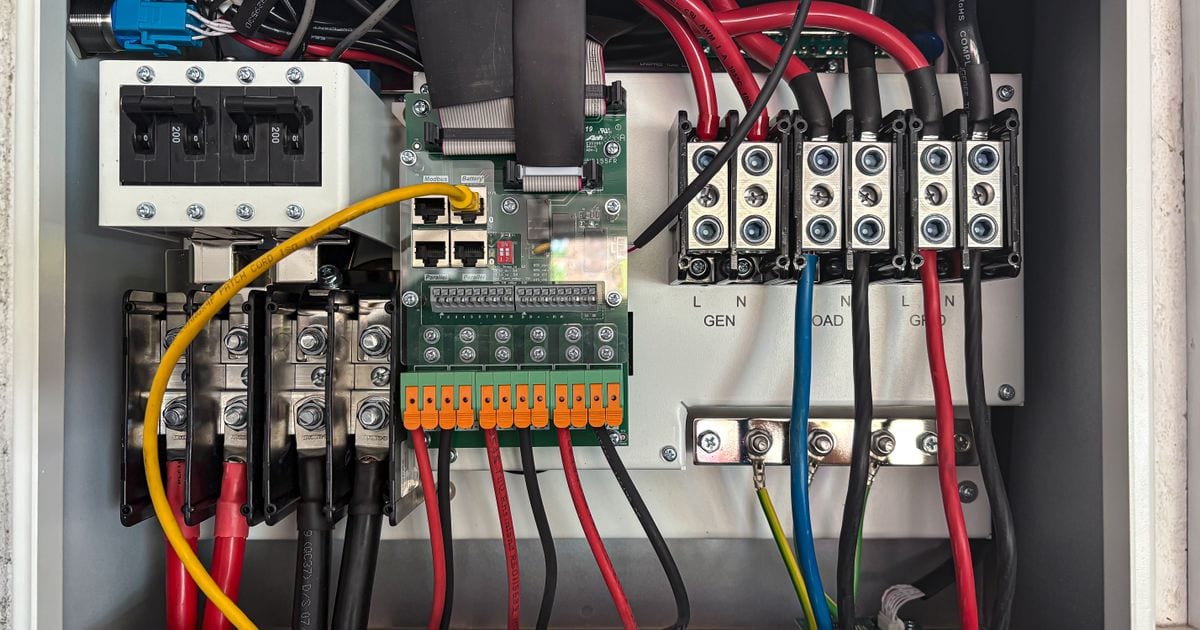
If you've had a circuit board assembled and you're now staring at the gap between "working board" and "shippable product," you've bumped into the question this article answers. Box build assembly is the term for that gap — and increasingly, it's the reason buyers start looking for a manufacturer instead of a list of subcontractors.
What Box Build Assembly Means
Box build assembly (also called system integration or electromechanical assembly) is the process of taking a populated, tested circuit board and turning it into a finished, ready-to-ship product. That means mounting the board into its enclosure or chassis, wiring it to power and to whatever it needs to talk to, connecting cables and harnesses, installing switches, displays or panel hardware, and running it through functional testing before it goes in a box.
The distinction that matters is this: PCB assembly produces a board. Box build assembly produces a unit — something a customer can plug in, power on, and use. If your product is more than a bare board (and almost every product is), box build is the step that gets it there. It's not an exotic or specialized service; it's what happens to a board after assembly, whether you outsource it or do it yourself.
What a Box Build Typically Includes
The scope varies with the product, but most box builds move through the same general stages:
- Mechanical integration — mounting the assembled board (or boards) into an enclosure, chassis, or panel, including standoffs, fasteners, and any internal brackets.
- Cable and wire harness installation — connecting the board to power, sensors, displays, or other sub-assemblies using pre-built harnesses or point-to-point wiring.
- Power supply and interconnect wiring — running power from the source (battery, supply, or mains input) through switches, fuses, and connectors to the board.
- Switches, displays, and panel hardware — installing and wiring the parts a user actually touches: toggles, indicator lights, screens, connectors on the enclosure face.
- Final assembly — covers, labels, mounting hardware, and anything that turns loose parts into one closed unit.
- Functional and system-level testing — powering the finished unit on and verifying it performs as a system, not just that the board works in isolation.
- Packaging for shipment — protective packaging suited to how the unit will travel and where it's headed.
Firmware or software loading is sometimes folded into this scope as well, typically as a final step before testing, though it depends on what the manufacturer offers and what the customer supplies.
None of this is complicated in isolation. What makes it worth outsourcing is that it takes real floor space, the right cable-prep equipment, and people who know how to read a build instruction the same way twice. Most product owners would rather spend that effort on their product than on standing up an assembly line for one.
Box Build Assembly vs. PCB Assembly
PCB assembly answers one question: does the board work electrically? Components are placed, soldered, inspected, and tested against the schematic. Once that board passes, PCB assembly is done — the deliverable is a board, not a product.
Box build assembly picks up from there and asks a different question: does the finished product work as a system? A board can pass every electrical test and still end up in a unit with a harness that's the wrong length, a connector that doesn't clear the enclosure wall, or a display that isn't wired to match the firmware. Those are integration problems, not board problems, and they only show up once the board is actually installed in its housing and run as a whole.
This is why the buyer asking "what is box build assembly" is almost always someone who has already solved the board question and is now facing the next one. Box build isn't a replacement for PCB assembly — it's the next stage of the same product, and a good manufacturer treats it that way rather than as a separate transaction with its own quoting cycle and its own risk.
When Consolidating Makes Sense — and When It Doesn't
The practical case for having one manufacturer handle board assembly through finished unit comes down to three things: fewer handoffs, one party accountable for the result, and problems caught by the people who will also answer for them.
When a board goes from an assembler to a separate cable house to a separate integrator, every handoff is a place where a small mismatch — a connector pinout, a harness length, a labeling spec — can slip through because no single vendor owns the finished product. Each one is only responsible for their piece. When something doesn't fit at final assembly, the coordination job of figuring out whose spec was wrong falls back on the buyer, usually at the worst possible time: right before a shipment is due.
There's a well-documented pattern behind why this matters, and it isn't unique to electronics. NASA's own systems engineering data on project life cycles shows that the cost of fixing a problem escalates sharply the later it's caught, with the bulk of lifecycle cost tied up in the testing and operations phases rather than early design. The same logic applies at a much smaller scale on a production floor: an integration issue caught by the team building the enclosure and the team building the board — because they're the same team — gets resolved before it becomes a shipment delay. An integration issue caught after the unit has already moved between three vendors becomes a phone tree.
Consolidating makes the most sense for lower-to-mid-volume industrial and technical products: instrumentation, marine and subsea equipment, control panels, anything where the run sizes don't justify an in-house assembly line but the reliability bar is high. It's also worth it whenever a product includes both board assembly and meaningful cable or harness work, since that's exactly the coordination gap that disappears when one shop does both.
It doesn't always make sense. A company running a mature, high-volume, stable product with its own assembly staff and floor space already has the accountability and communication a consolidated vendor would otherwise provide — bringing in an outside box build partner adds a step rather than removing one. Consolidating is a tool for the product that's still finding its volume or still changing revision to revision, not for the one that's been running the same way for years.
What to Look for in a Box Build Partner
A few things separate a real box build capability from a PCB assembler saying yes to keep a customer:
Documented workmanship standards. Ask what standards govern the work. IPC-A-610 covers acceptability of electronic assemblies; IPC/WHMA-A-620 covers acceptance criteria for cable and wire harness assemblies specifically. A manufacturer building to both, and able to show it, is inspecting box builds the same way every time rather than relying on one experienced technician's judgment.
In-house capability across both board assembly and cable or sub-assembly work. This is the coordination gap most guides skip past. If board assembly and harness work happen at two different companies, someone still has to manage that handoff — usually the buyer. A shop running both lines under one roof removes that step entirely, because the same team building the board also builds and tests the harness that plugs into it.
The ability to go from prototype to production without changing manufacturers. Products change revisions, and a manufacturer who only handles one volume tier forces a requalification with a new vendor right when the product is finally stabilizing. A partner who can take a design from a first article through steady production keeps that history — and that accountability — in one place.
Allendale Electronics runs SMT, through-hole, and mixed-technology assembly alongside cable and sub-assembly work in the same facility in Lockeport, Nova Scotia, and builds and inspects that work against IPC-A-610, J-STD-001, and IPC/WHMA-A-620 standards. For a marine or ocean technology company running instrumentation into a workboat, or an industrial buyer that needs a finished unit rather than a bare board, that means one point of contact and one team accountable for the whole build — not a board from one supplier and a harness from another.
The Short Version
Box build assembly is what turns an assembled board into a finished product: mechanical integration, cable and harness work, wiring, panel hardware, final assembly, testing, and packaging. It's the natural next step after PCB assembly, not a separate service, and the case for consolidating it with your board manufacturer is straightforward — fewer handoffs, one accountable team, and integration problems caught before they become shipping delays.
It isn't the right call for every product. A high-volume, stable line with its own assembly staff may not need it. But for a lower-to-mid-volume, technically demanding product — the kind built in small runs for customers who need it to work the first time — having one manufacturer carry the build from populated board to finished unit is usually the difference between a smooth production ramp and a lot of time spent chasing down whose fault a mismatch was.