What the Latest Supply Chain Data Means for Your Next Build
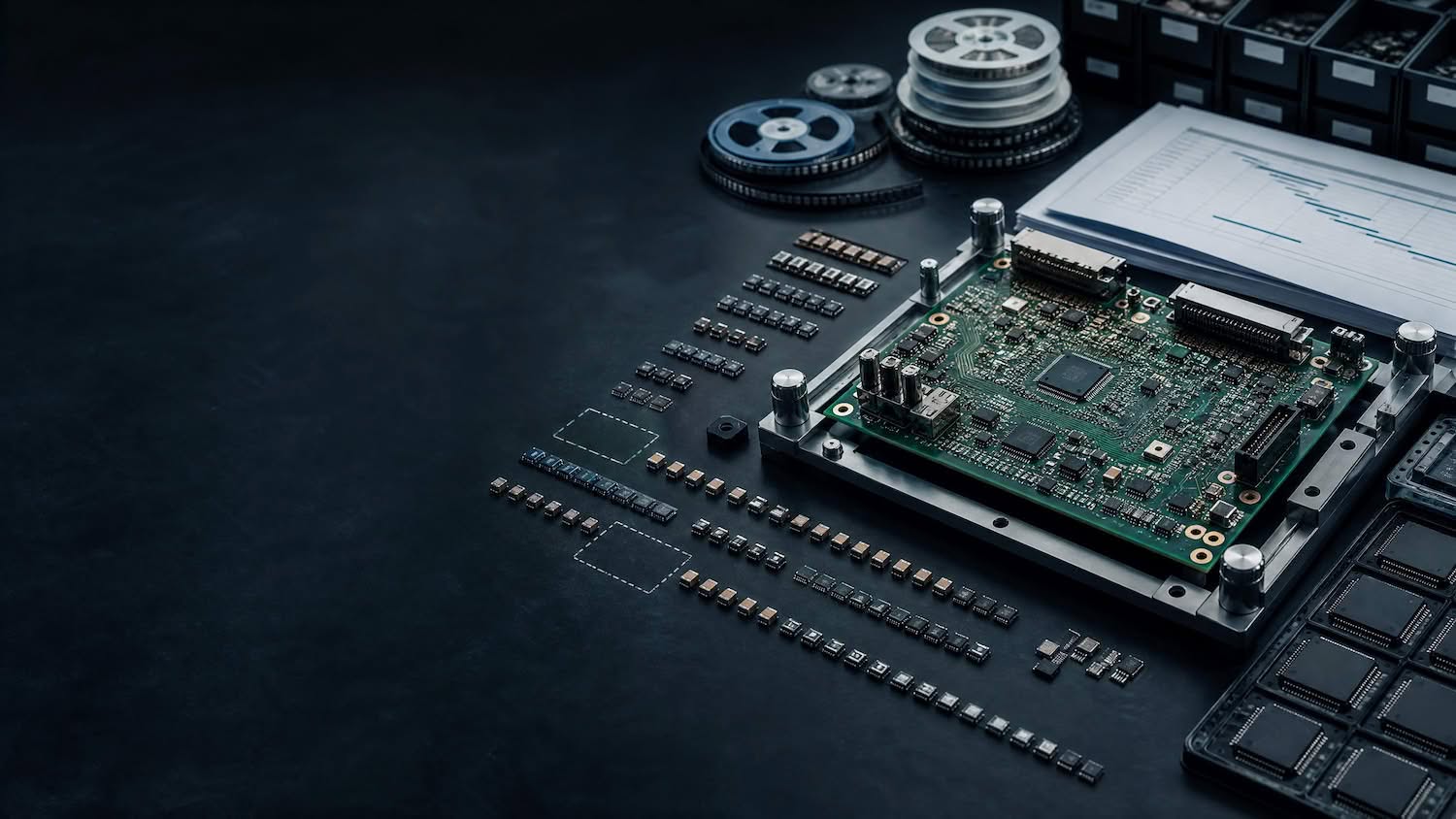
A perspective from Allendale Electronics on the Global Electronics Association’s August 2026 Global Sentiment Survey.
The Global Electronics Association published survey findings in August that confirm what our purchasing desk has been seeing since spring: component and materials availability is tightening again, and the trend lines are pointing the wrong way.
The headline numbers are worth sitting with. Roughly two-thirds of electronics manufacturers surveyed said the parts and materials they depend on are either constrained or carrying extended lead times. Not one respondent described the market as readily available with supply to spare. Comparing Q2 2026 to Q1, more than four times as many manufacturers said availability got worse as said it got better. Over half reported that supplier lead times had stretched further, against three percent who saw them shorten.
That last figure is the one that lands hardest on a contract assembler. Availability problems are frustrating. Lead time problems are a scheduling problem, and scheduling problems become delivery-date problems for our customers.
Read the full article from the Global Electronics Association →
This isn’t 2021 all over again — and that’s the point
It would be easy to read this as another shortage cycle and wait for it to pass. We don’t think that’s the right read.
The 2020–2022 crunch was concentrated and loud. This one is diffuse and quiet. The survey found no single dominant culprit: memory and laminates/resins each accounted for about 16% of reported disruption, microprocessors and GPUs 14%, passive components 11%. There’s no one category to design around. Pressure is coming from several directions at once, which means a BOM can look perfectly healthy on paper and still have three unrelated lines quietly slip out four months.
The regional detail matters for North American customers, too. Laminates and resins were flagged by more than a third of European respondents but only about six percent of North American ones. In APAC, passives were the outsized pain point. Different regions carry different exposures; a useful argument for knowing where your parts actually originate, not just who invoices you for them.
Our own experience through the summer tracks the survey: it isn’t the exotic parts causing grief. It’s ordinary passives, commodity memory, and the occasional laminate substitution that pushes a bare board out by weeks.
Why booking early has stopped being optional
Allendale has been assembling printed circuit boards since 1976. In a normal market, the sequence is straightforward: you send us a BOM and Gerbers, we quote, we source, we build. Procurement fits comfortably inside the build schedule.
In a market like this one, procurement is the schedule. Placement, reflow, inspection and test are the predictable part; they take what they’ve always taken. The variable is how long we wait on the slowest line item on your bill of materials.
Which is why the single most valuable thing a customer can do right now is talk to us sooner than feels necessary:
Give us the BOM before the design is final. We don’t need release-ready files to start checking availability. An early look lets us flag the lines that are trending long while there’s still time to swap a part rather than redesign around a shortage.
Book capacity against a forecast, not a purchase order. If you know you’ll need 500 units in Q1, tell us in Q3. Long-lead parts can be secured against a scheduled build while there’s still stock to secure. Waiting until the PO is signed means shopping in the same tightened market as everyone else, on a shorter clock.
Approve alternates up front. A pre-approved second source on your passives and memory is the cheapest insurance available. When we can substitute a form-fit-function equivalent without waiting on an engineering decision, weeks come off the critical path. When we can’t, they go back on.
Consider buffer stock on the parts that hurt. For repeat builds, holding a strategic reserve on the two or three lines that consistently run long is usually cheaper than an expedited freight bill or an idle production slot.
Let us kit early. Parts arriving well ahead of the build slot is a good outcome, not wasted money. We’d rather hold your kit and build on schedule than hold your build waiting on a kit.
What we’re doing on our end
We’ve extended our own forward-buying horizon on common passives and are tracking lead-time movement across our approved supplier base more actively than we did a year ago. Where we see a customer’s BOM carrying a line that’s drifting, we raise it at quote time instead of at kitting time; the earlier that conversation happens, the more options are still on the table.
We’re also being straight with customers about dates. A confident delivery commitment we can hold is worth more than an optimistic one we can’t, and in this market the difference between the two is usually decided at the sourcing stage, not the assembly stage.
The short version
The industry isn’t in crisis. But conditions are tightening rather than easing, the pressure is spread across enough categories that no BOM is automatically safe, and lead times are stretching for far more manufacturers than they’re shortening for.
None of that is cause for panic. It is cause for planning further ahead than you did last year.
If you have a build coming up in the next two quarters, now is a good time to get the BOM in front of us. We’d much rather solve a sourcing problem in September than explain one in January.
Allendale Electronics has been building marine and industrial electronics from Nova Scotia since 1973, with in-house PCB assembly since 1976. To discuss an upcoming build or have a BOM reviewed for supply risk, get in touch.